Quick answer
Granulation Methods
Wet granulation shapes powder with a liquid binder.
Fluid bed granulation granulates and dries in one process. Dry granulation compacts powder with rollers and uses no liquid, so it suits material that cannot take liquid or drying. The right method depends on how the powder tolerates moisture and what granule you need.
- Wet: binder liquid, then sized granules
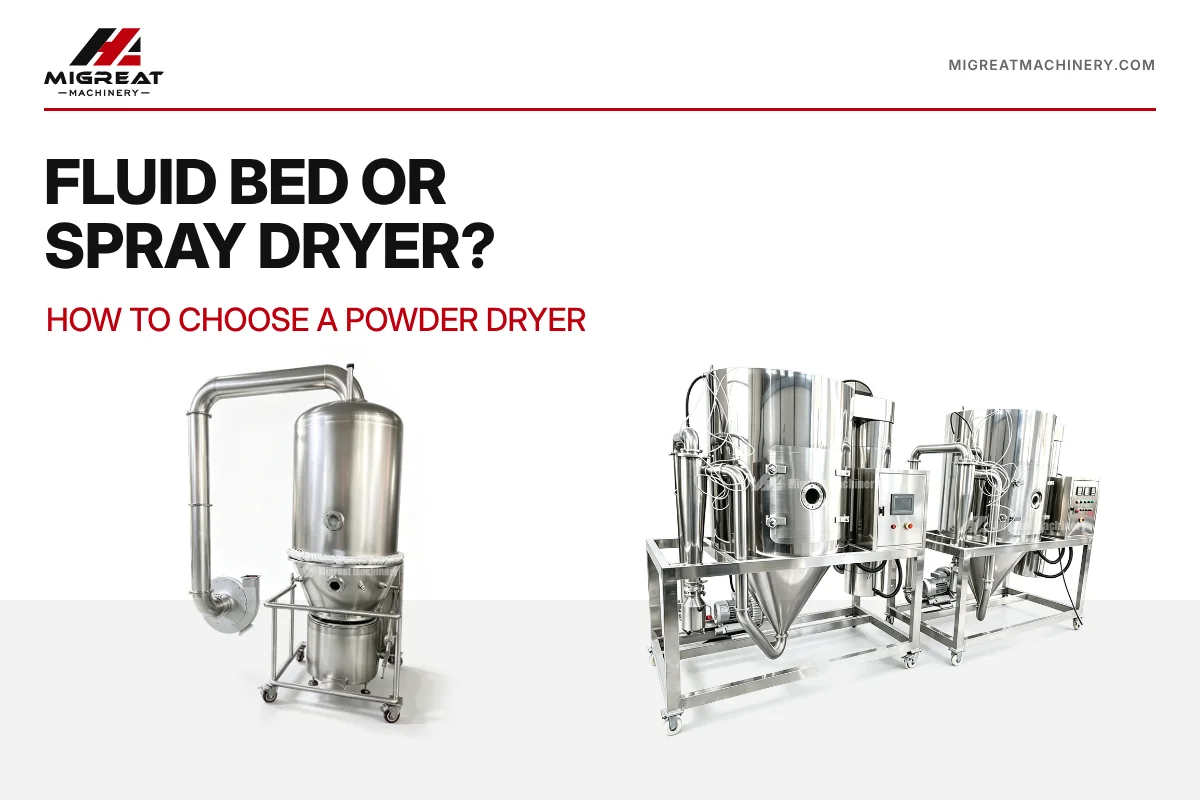
- Fluid bed: granulate and dry together
- Dry: roll compaction, no liquid
- Decide by moisture tolerance and granule requirement
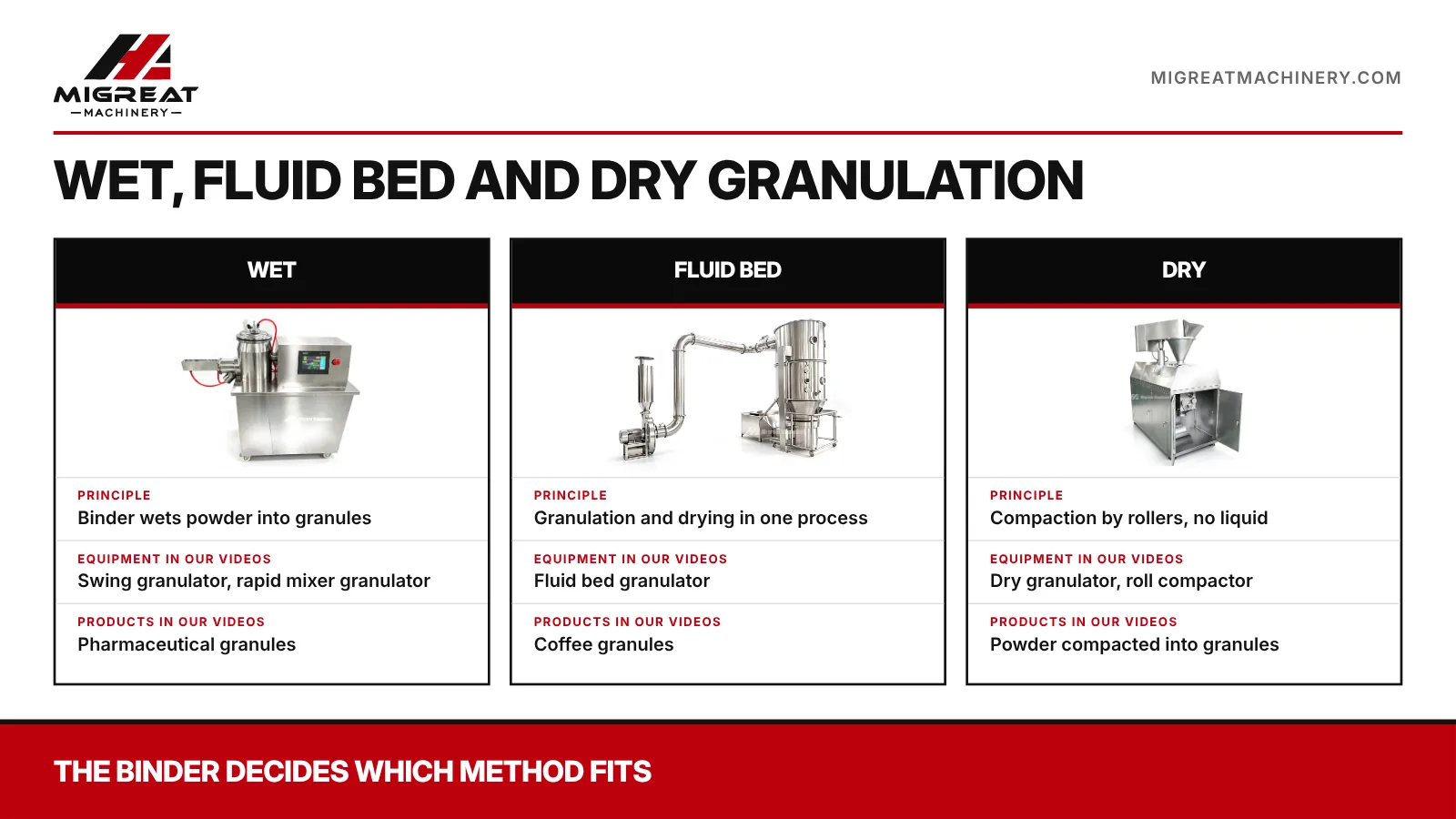
Three methods side by side
Wet
Fluid bed
Dry
Principle
Binder wets the powder, wet mass is shaped into granules
Granulation and drying happen in the same equipment
Powder is compacted between rollers
Liquid used
Yes, binder
Yes
No
Think about
Drying the wet granules afterwards
Equipment handles both steps
Material that cannot take liquid or heat
See the machines


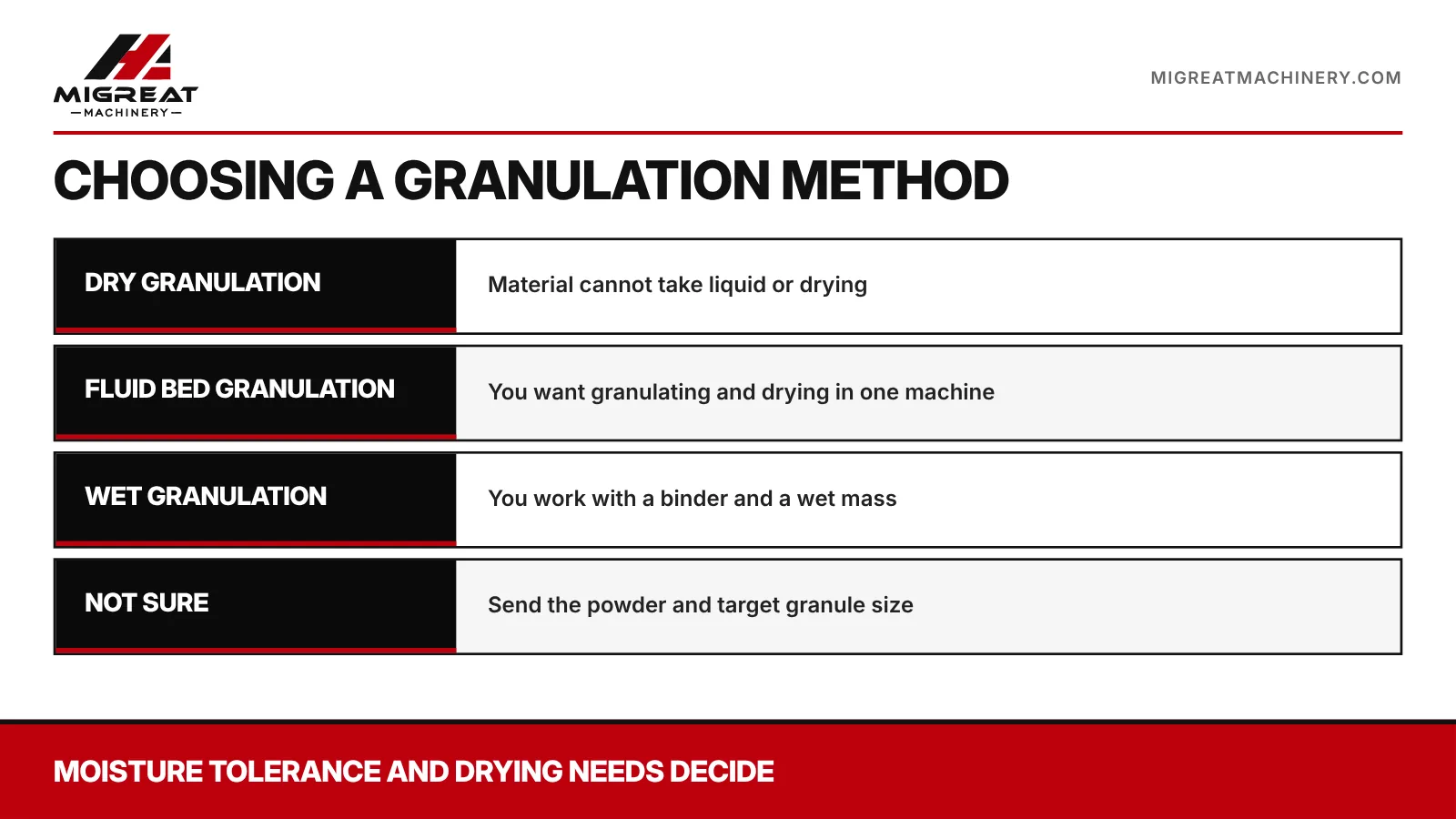
How to choose
1
Check moisture tolerance
If the material cannot take liquid or drying, look at dry granulation.
2
Decide if drying is part of the job
A fluid bed granulator handles granulation and drying in one machine.
3
Define the granule
Target size and use set how much shaping the process must do.
QWhat is the difference between wet and dry granulation?
Wet granulation uses a liquid binder; dry granulation compacts powder with rollers and uses no liquid.
QWhy choose fluid bed granulation?
It granulates and dries in one process, so one machine covers two steps.