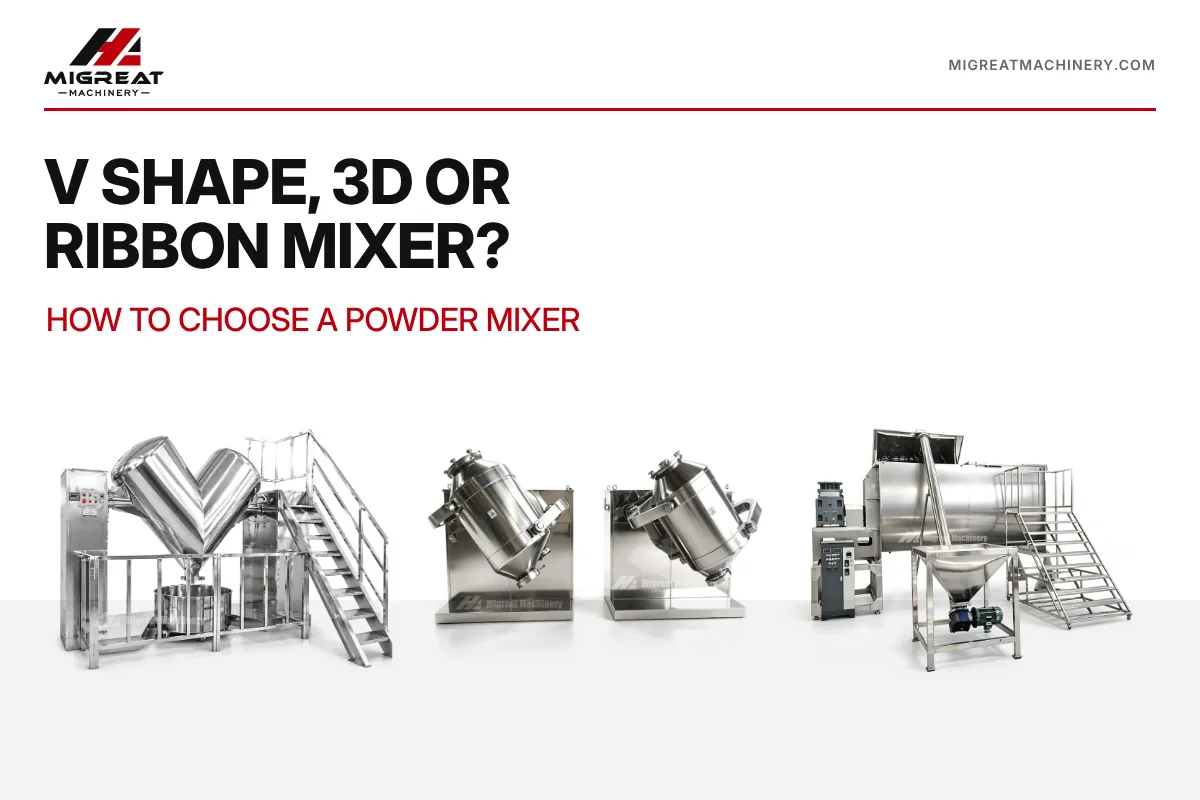
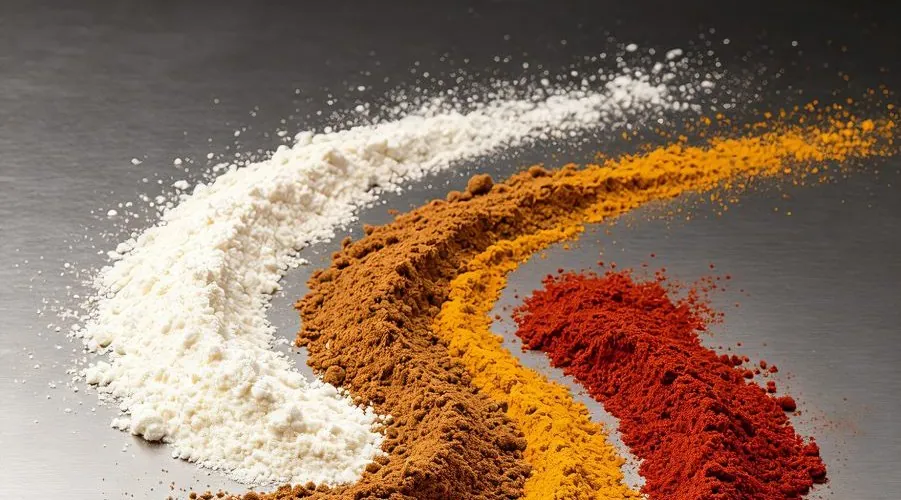
A ribbon blender is a horizontal mixer in which an inner and an outer ribbon turn on one shaft.
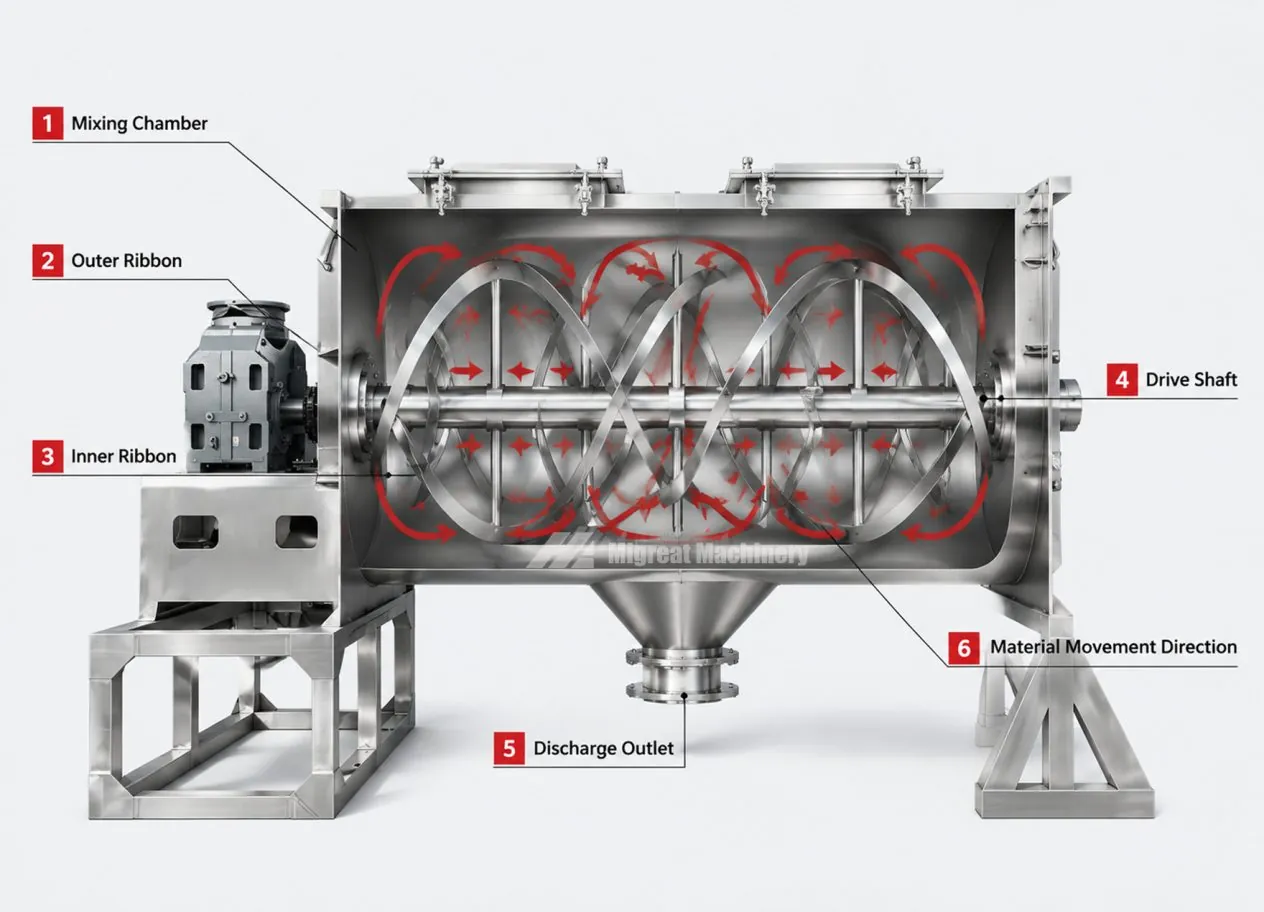
The outer ribbon pushes material from both ends toward the centre; the inner ribbon moves it back toward both ends. This circulation mixes powders and granules evenly. Capacity depends on working volume, material characteristics and production requirements.
- Mixes powders, granules and other dry materials
- Suits spice, seasoning, sugar, flour, protein powder and food additives
- Stainless steel build meets food and pharmaceutical hygiene needs
- Capacity is chosen per batch, not by machine size alone
What is a ribbon blender machine?
A Ribbon Blender, also known as a Ribbon Mixer or Powder Blender, is a horizontal mixing machine designed for blending powders, granules, and other dry materials.
In powder processing, a uniform mixture of different materials is essential for consistent product quality. From food ingredients and spices to pharmaceutical powders and chemical materials, the mixing process directly affects final product performance. The ribbon mixer is one of the most commonly used industrial powder mixers because of its efficient mixing, reliable operation and suitability for a wide range of powder and granular materials.
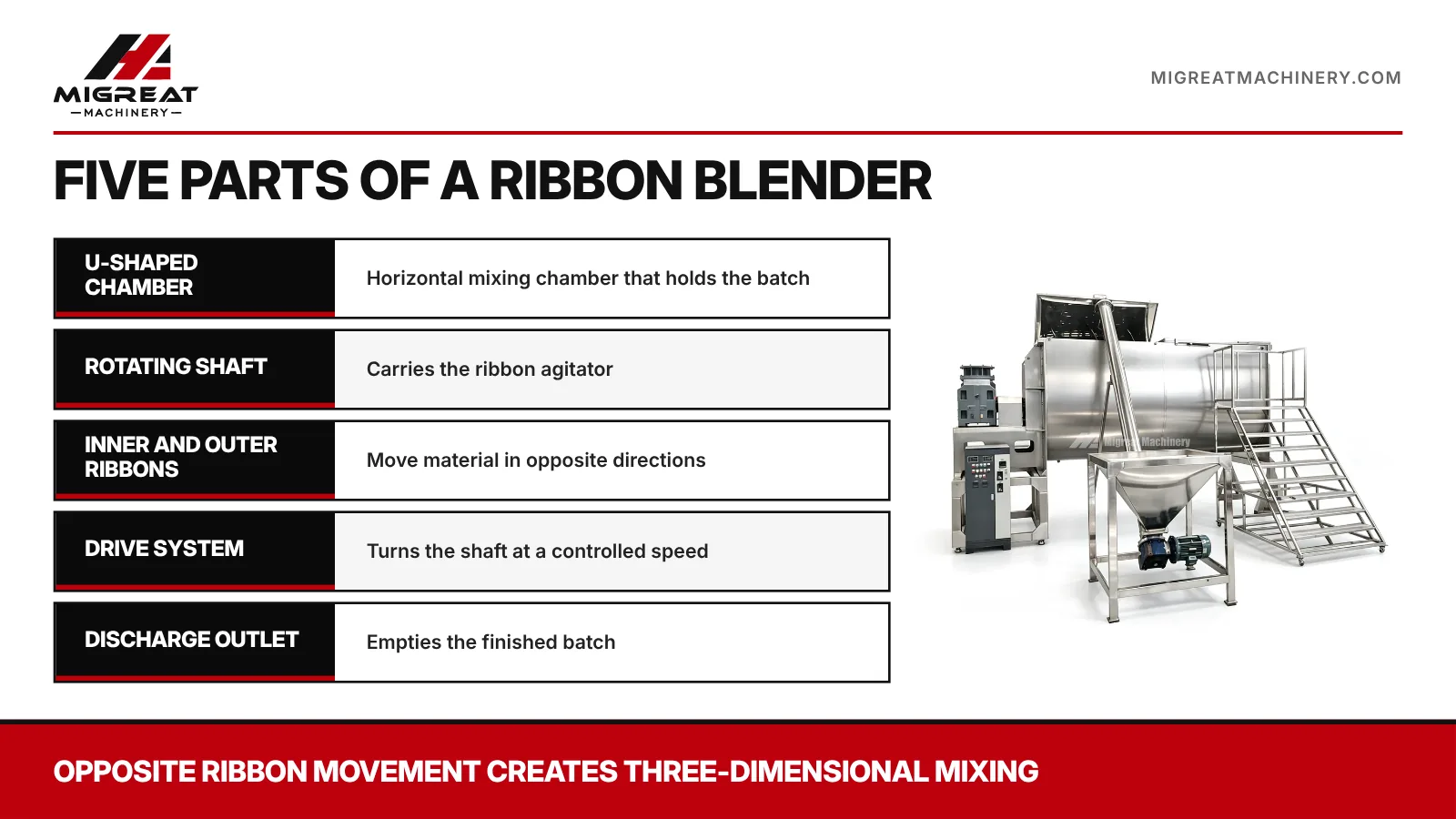
Compared with traditional mixing equipment, a ribbon blender provides efficient mixing, large processing capacity, easy operation, and good adaptability for various powder processing applications.

How does a ribbon blender work?
The working principle is based on the combined movement generated by the inner and outer ribbon agitators. During operation, the motor drives the shaft and ribbon assembly to rotate at a controlled speed.
Moves materials from both ends of the mixing chamber toward the center.
Transfers materials in the opposite direction, from the center toward both ends.
This continuous axial and radial movement creates circulation and cross-mixing of materials throughout the chamber, ensuring a homogeneous mixture.
Ribbon blender capacity selection
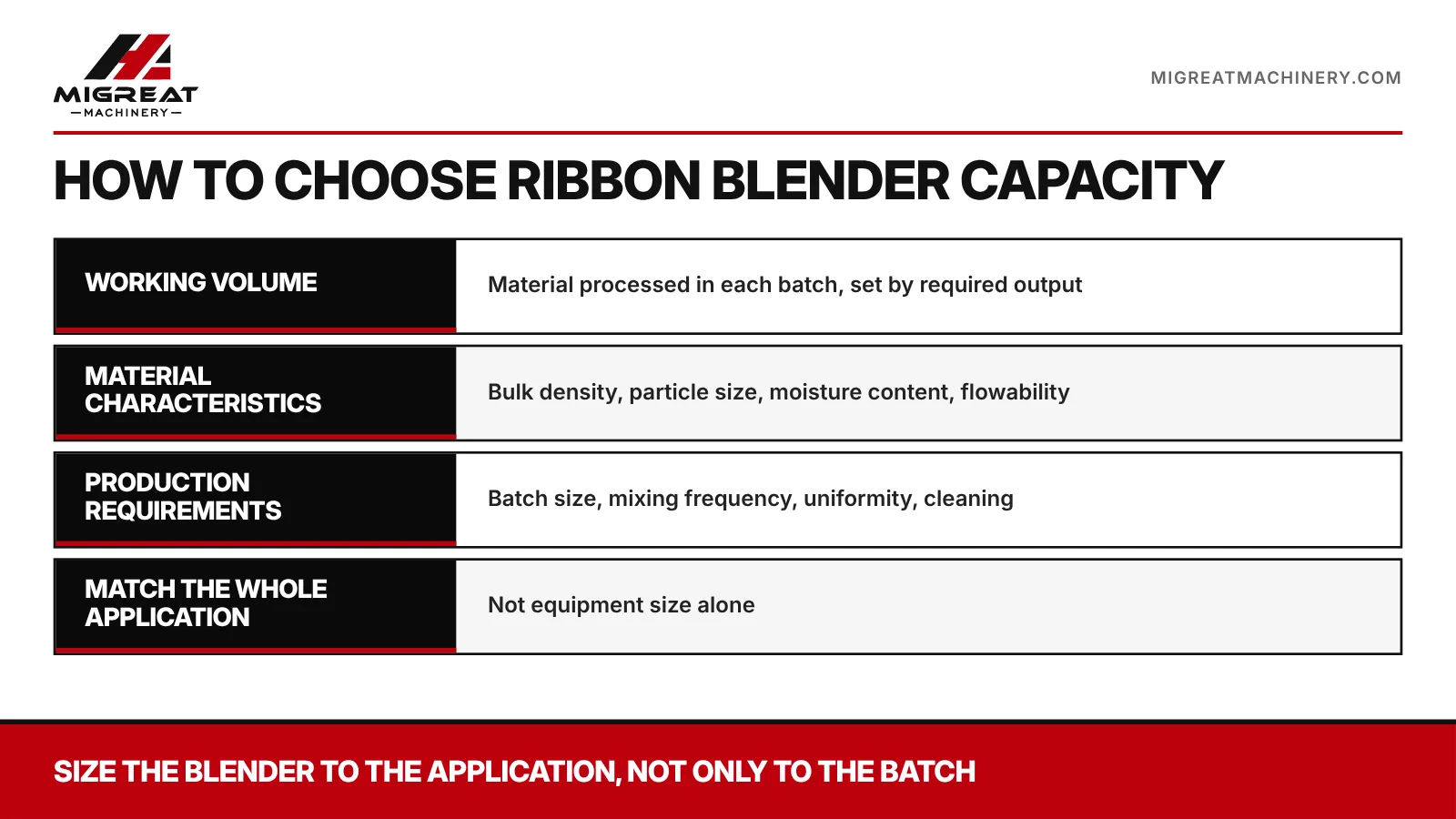
Choosing the correct capacity is an important factor when purchasing a ribbon blender. The suitable model depends not only on production volume but also on material properties and processing requirements.
Working volume
The actual amount of material processed during each batch. Consider the required production output and select an appropriate mixing capacity.
Material characteristics
Different powders have different properties:
- Bulk density
- Particle size
- Moisture content
- Flowability
Production requirements
For industrial production, consider:
- Batch size
- Mixing frequency
- Required mixing uniformity
- Cleaning requirements

Benefits of a ribbon blender machine
Applications of a ribbon blender
How to choose the right ribbon blender?
When selecting a ribbon blender machine, consider:
A suitable mixing solution should match the specific requirements of the application rather than only focusing on equipment size.
Ribbon blender FAQ
QWhat is a ribbon blender used for?
It blends powders, granules and other dry materials in food, nutraceutical and chemical production.
QHow does a ribbon blender mix powder?
The outer ribbon moves material toward the centre while the inner ribbon moves it toward both ends, so the batch circulates and cross-mixes.
QWhat affects ribbon blender mixing quality?
Material characteristics, filling ratio, rotation speed, mixing time and the required mixing accuracy.
QHow do I choose a ribbon blender capacity?
Start from the working volume per batch, then check bulk density, particle size, moisture and flowability, and your batch size, frequency and cleaning needs.
Conclusion
A ribbon blender is an efficient and reliable solution for powder and granule mixing applications. With advantages including uniform mixing performance, flexible capacity options, and a wide application range, it has become an important piece of equipment in modern powder processing industries.
Migreat Machinery provides customized powder mixing solutions, including ribbon blenders and other powder processing equipment, to meet different production requirements in food, nutraceutical, pharmaceutical, and chemical industries.