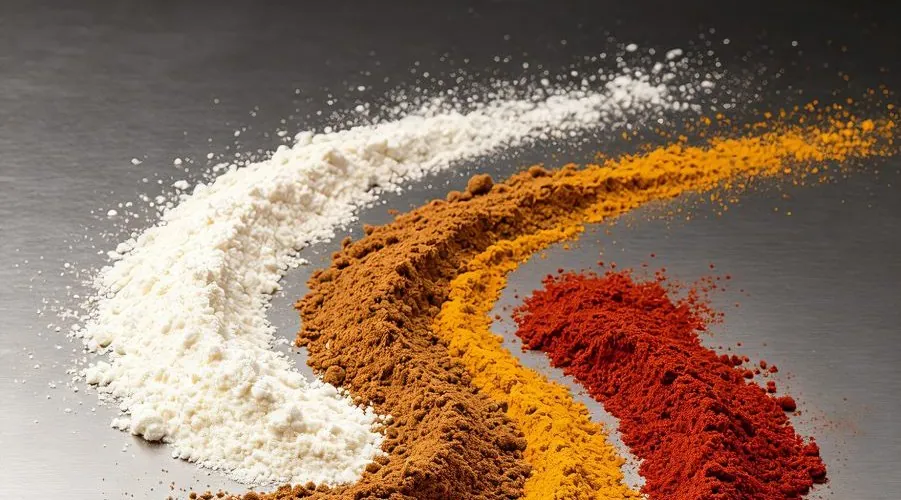
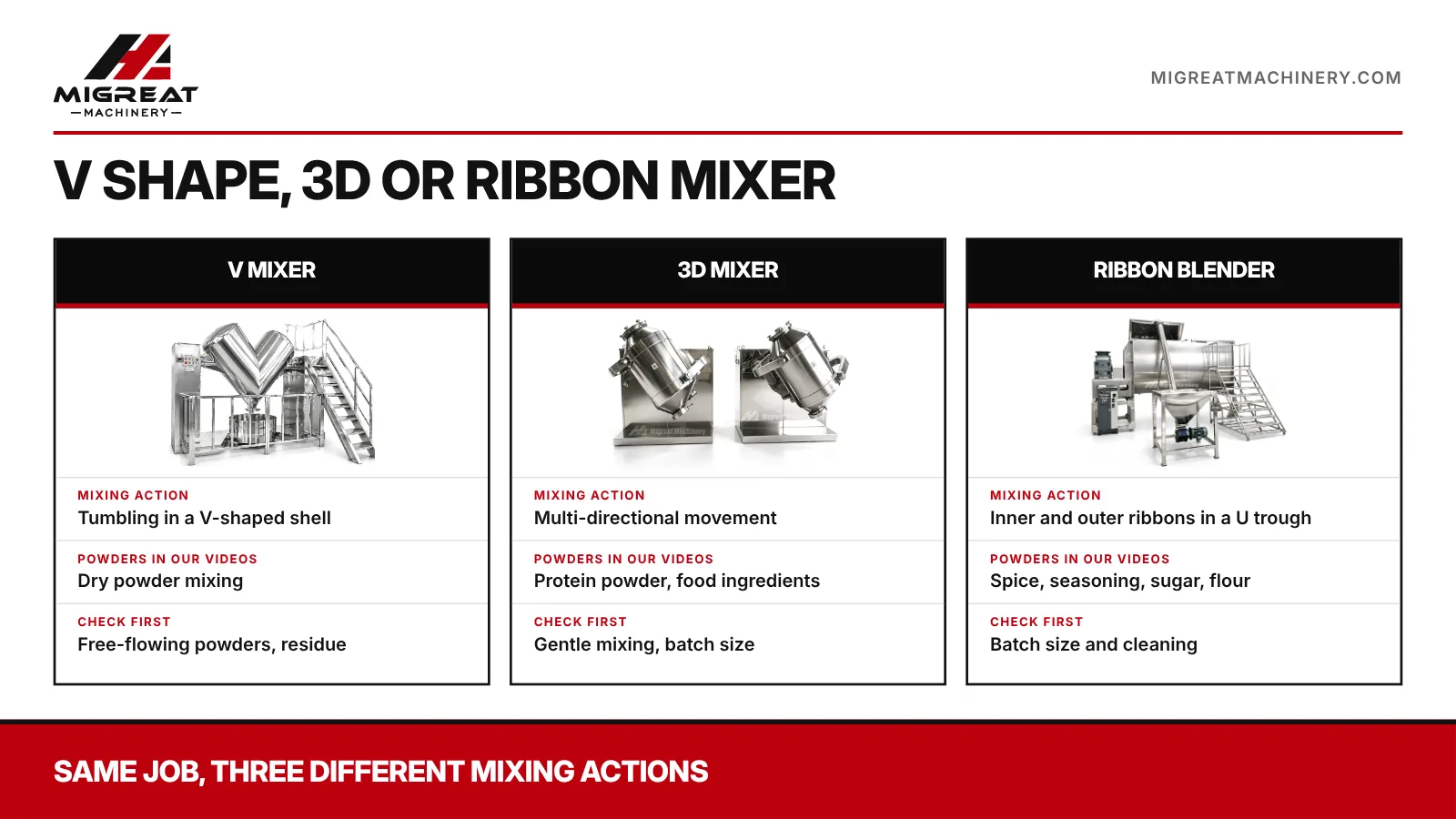
A V mixer tumbles free-flowing dry powder gently in a V-shaped shell.
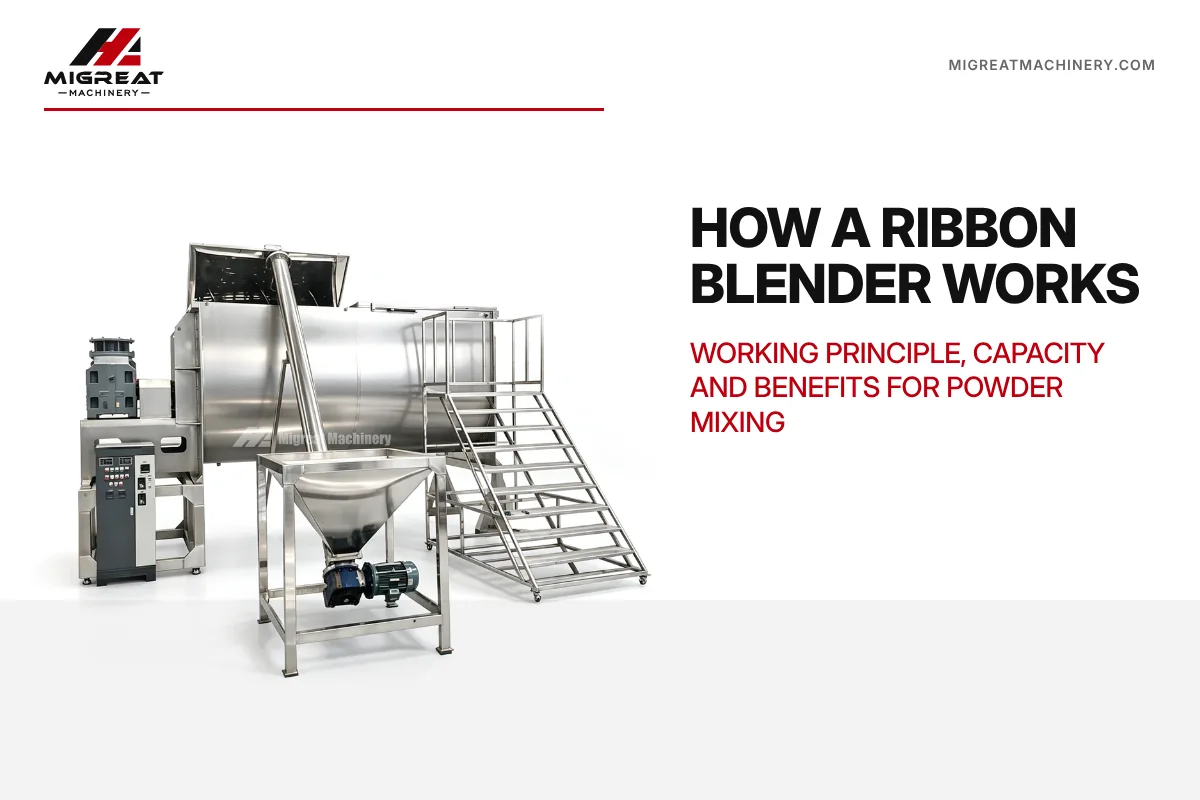
A 3D mixer moves material in several directions at once. A ribbon blender turns inner and outer ribbons in a horizontal U trough and suits larger batches and continuous industrial production. Pick by material behaviour and batch size, then check cleaning and residue.
- V mixer: gentle tumbling for dry powders
- 3D mixer: multi-directional movement for ingredient blends
- Ribbon blender: horizontal trough for larger batches
- Always check batch size, filling ratio and cleaning
The three mixers compared
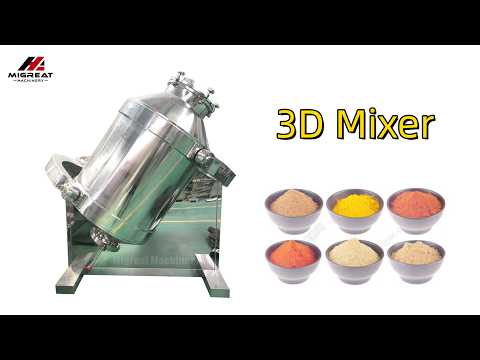
See them mix


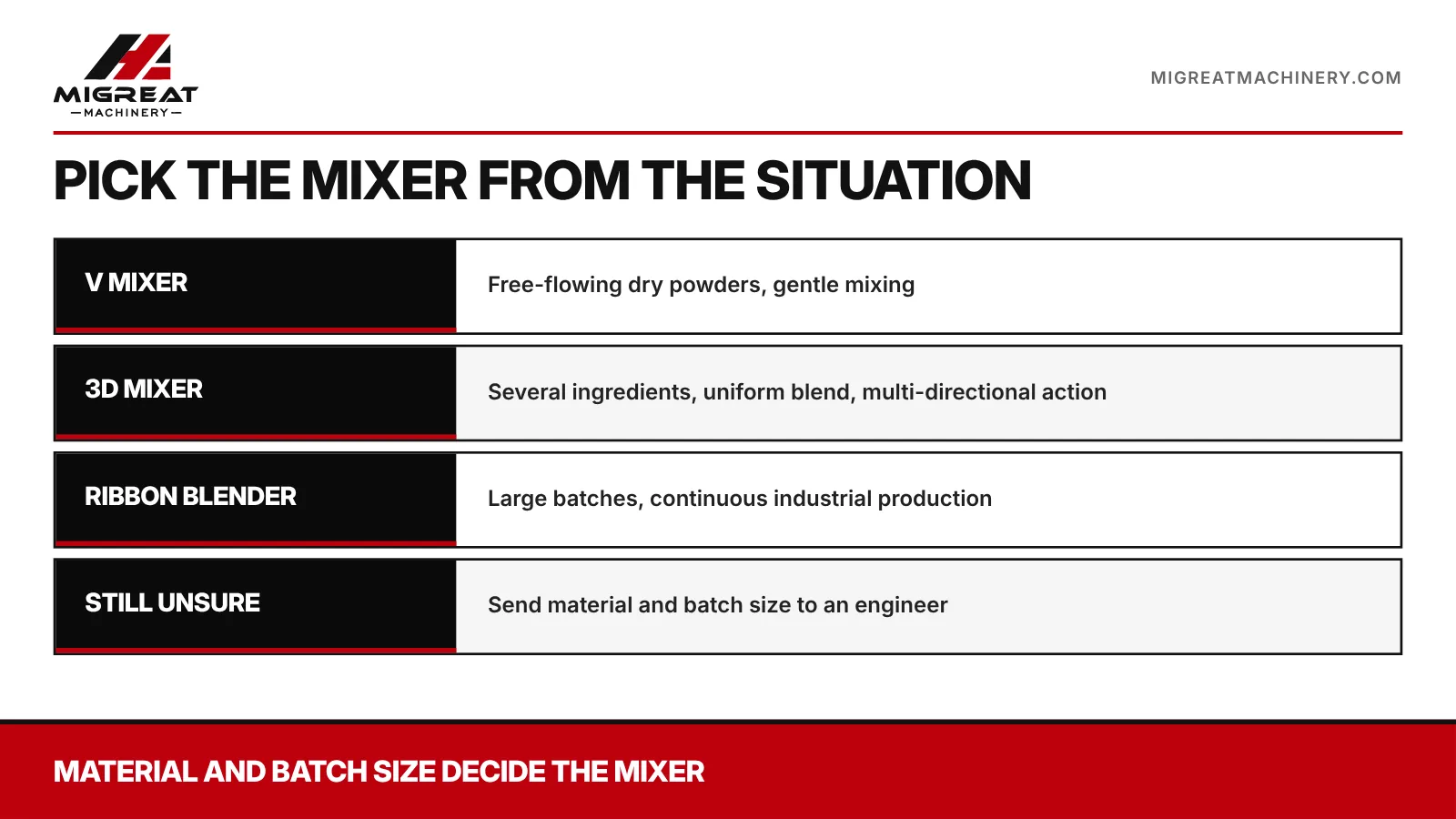
How to pick
Start from the batch
Batch size and mixing frequency narrow the choices quickly. Large batches usually point to a ribbon blender.
Look at the material
Bulk density, particle size, moisture and flowability change how a powder behaves. A V mixer suits free-flowing dry powder.
Decide the accuracy
Products with accurate ingredient ratios need a uniform blend. A 3D mixer moves material in several directions.
Plan cleaning and discharge
Cleaning requirements decide how easy a shell or trough is to run between batches.
The best mixer is the one that matches your material and batch, not the biggest one. Learn how the ribbon design works in our ribbon blender guide.
Mixer selection FAQ
QWhich mixer is best for powders?
There is no single best. A V mixer, 3D mixer or ribbon blender each suits different materials and batch sizes.
QWhich mixer suits large production batches?
A horizontal ribbon blender processes large quantities and suits continuous industrial production.
QWhat should I send to get a mixer recommendation?
Your material, batch size, mixing frequency and cleaning needs. See what to send before a quote.