A vibrating sieve separates powder by size across a mesh screen.
After grinding, screening removes oversized particles and keeps powder quality consistent before it goes to packaging. Choose by mesh size, capacity, the behaviour of your material, dust control and how easily the screen can be cleaned.
- Vibration moves powder across the screen; oversize is rejected
- Sits after the grinder in a spice or powder line
- Rotary and linear types for different layouts
- Mesh size, capacity and material behaviour decide the choice
What a vibrating sieve does
After grinding, the powder is conveyed to a screening machine for final particle size separation. The screening process removes oversized particles and ensures consistent powder quality. Qualified powder is then collected and transferred to the packaging process.

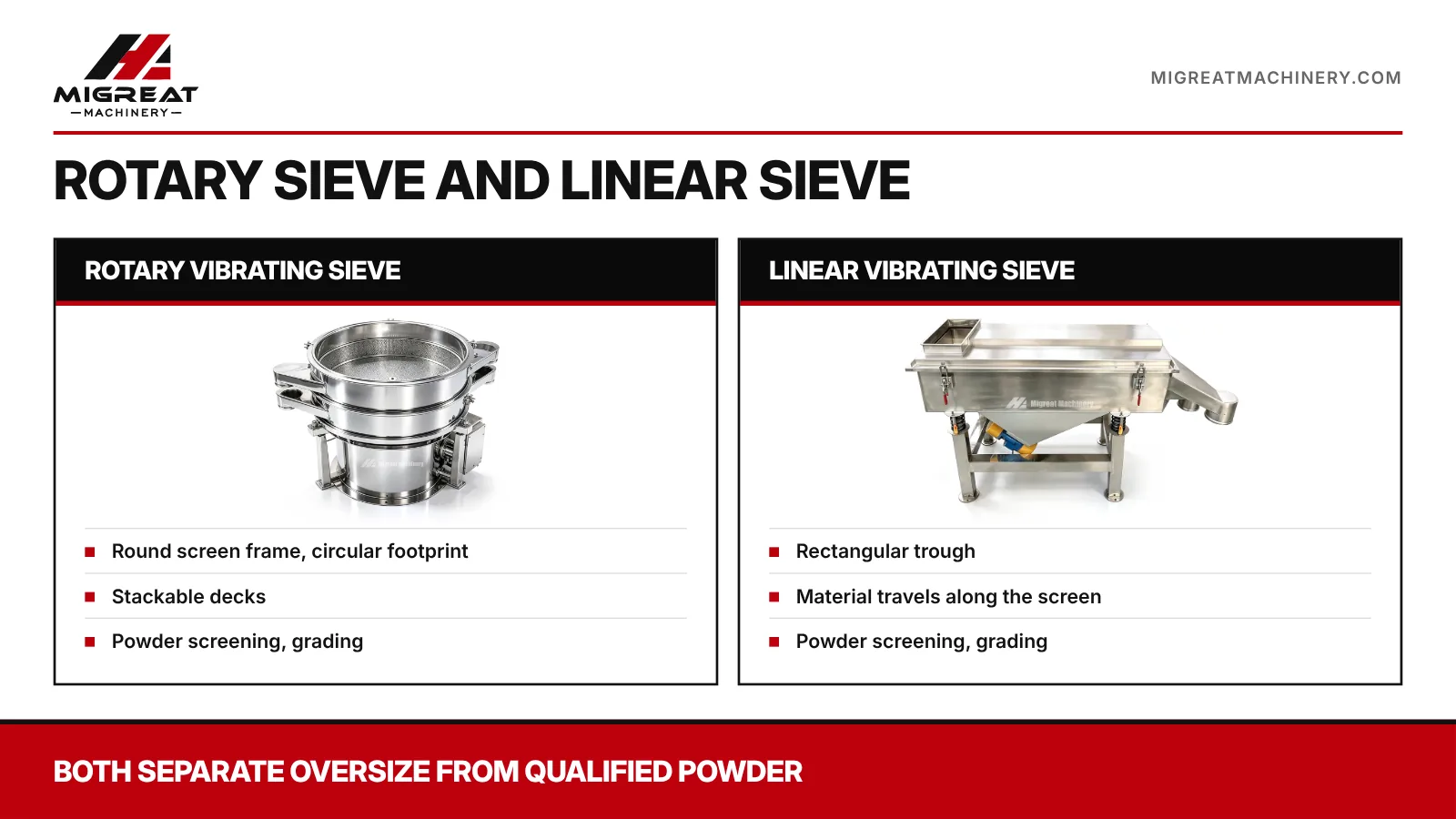
Rotary or linear?
Five checks before you choose
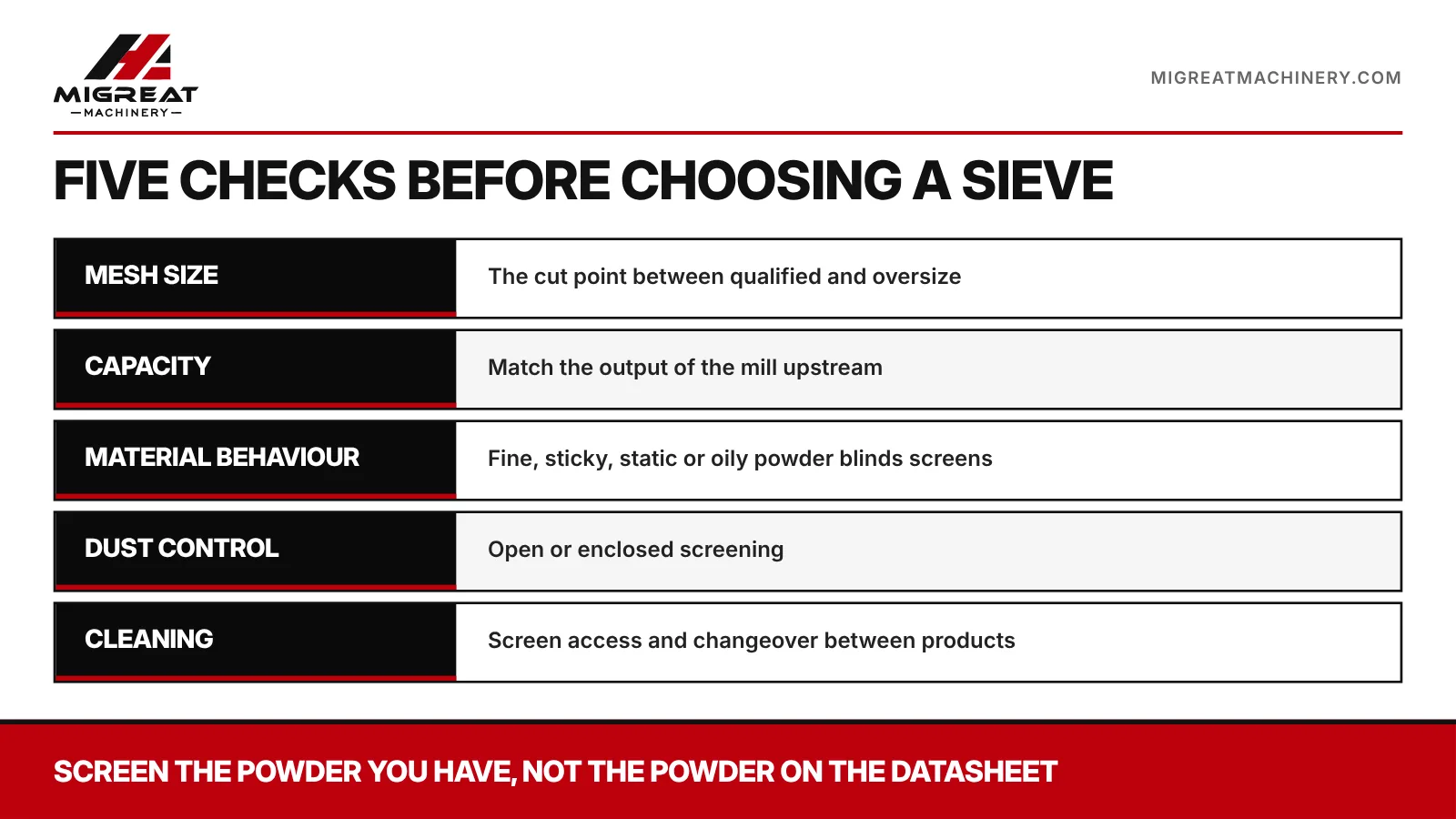
Mesh size
Decide the cut point between qualified powder and oversize.
Capacity
Size the sieve to the output of the mill. Check fine grinding options first.
Material behaviour
Fine, sticky, static or oily powders can blind a screen, so say so when you ask for a quote.
Dust control
Screening can be open or enclosed depending on the product and the room.
Cleaning
Easy screen access shortens changeover between products.

Screening is the last quality gate in a spice powder line before packaging.
QWhere does the sieve go in a spice line?
After the grinder, before packaging.
QWhy does mesh size matter?
It sets the particle size cut: qualified powder passes and oversize is removed.
QWhich sieve type should I choose?
Rotary or linear depends on floor space, line layout and discharge. Tell us your material and capacity.