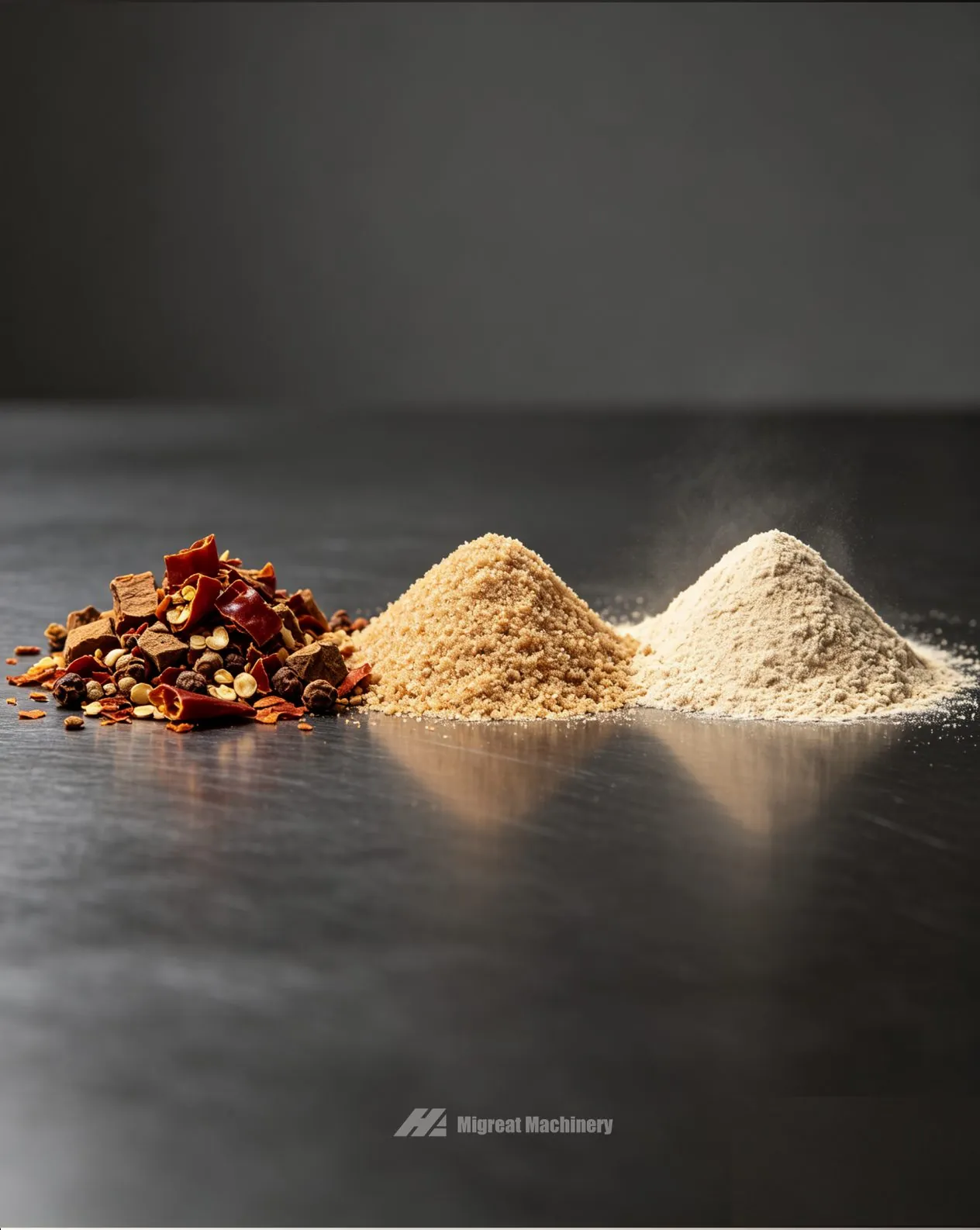
An air classifier mill grinds material at high speed and classifies the powder with air in the same system.
Fine powder passes the classifier and is collected; coarse particles stay in the grinding zone until they are fine enough. This gives finer powder with tighter particle size control, typically 100 to 300 mesh for spices.
- Combines high-speed grinding and air classification
- Typically reaches 100 to 300 mesh
- Suited to spices, herbs, grains and beans
- Chosen when a hammer mill cannot reach the fineness you need
How an air classifier mill works
An air classifier mill reduces particle size in a grinding chamber and then sorts the powder by size using an air stream and a classifier. Only particles fine enough to pass the classifier leave with the air; larger particles are held back for further grinding. The result is a powder whose top size is set by the classifier rather than by a screen.
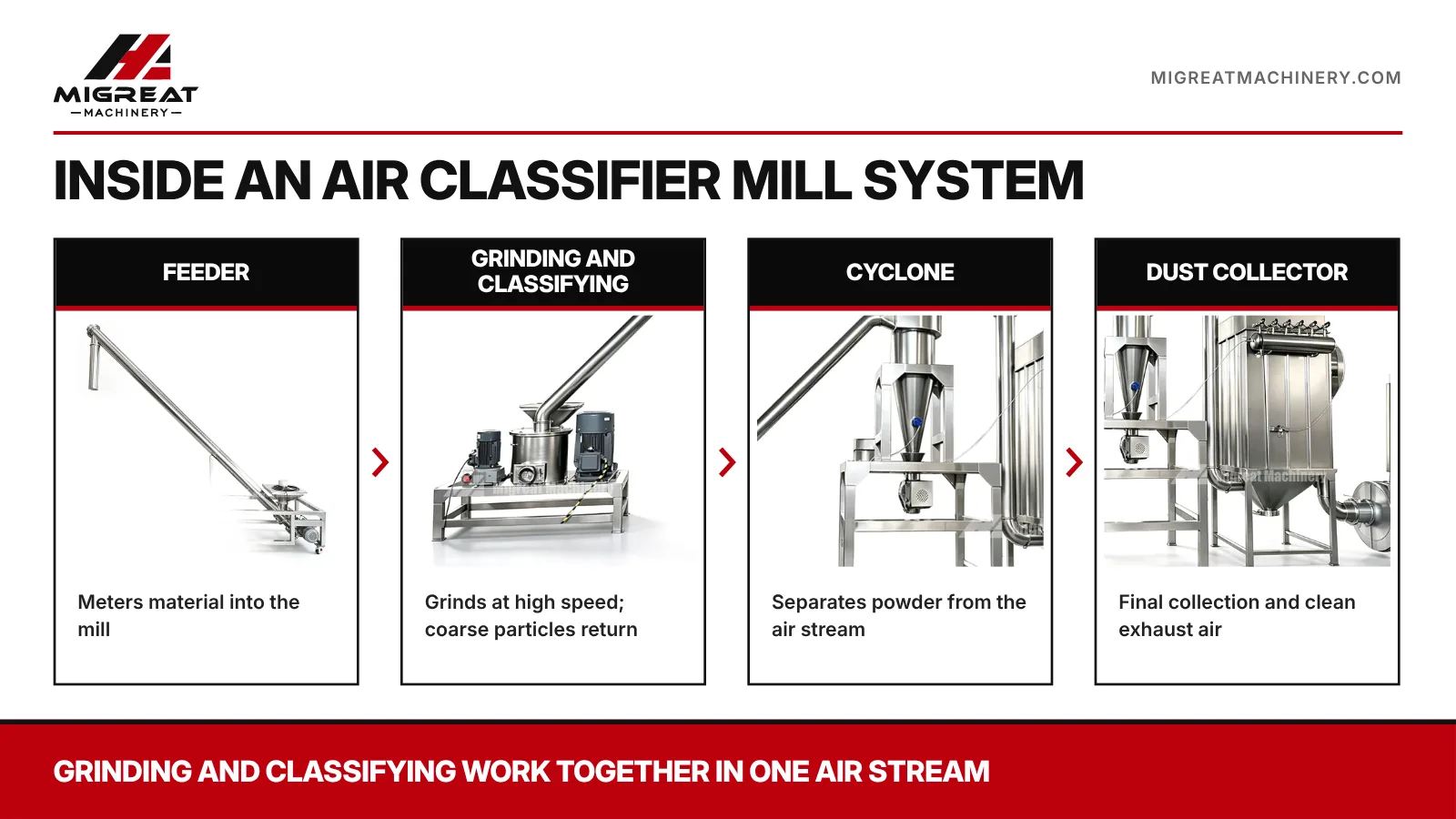
Feed
A feeder meters the material into the grinding chamber at a steady rate.
Grind
High-speed grinding reduces the particle size.
Classify
The air stream carries particles to the classifier. Fine powder passes through; coarse particles return for more grinding.
Collect
Powder is separated from the air in a cyclone and dust collector, then sent on to screening or packing.

Features that set it apart
Fine, controlled powder
Air classification gives finer powder with more precise particle size control, typically 100 to 300 mesh.
Adjustable fineness
The target size is set through the classification, not only by changing screens.
Complete system
Mill, cyclone and dust collector work together to grind, classify and collect.
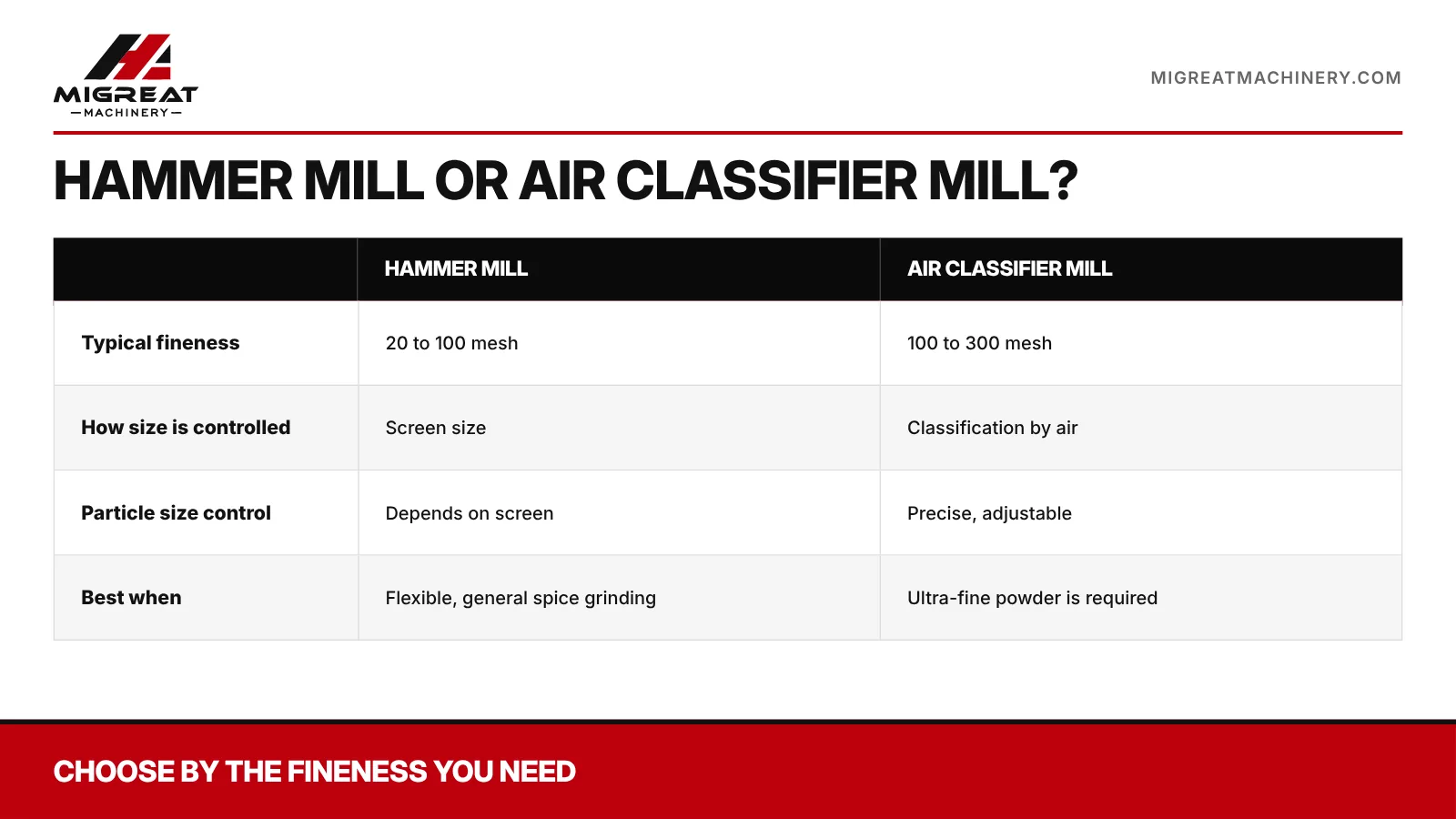
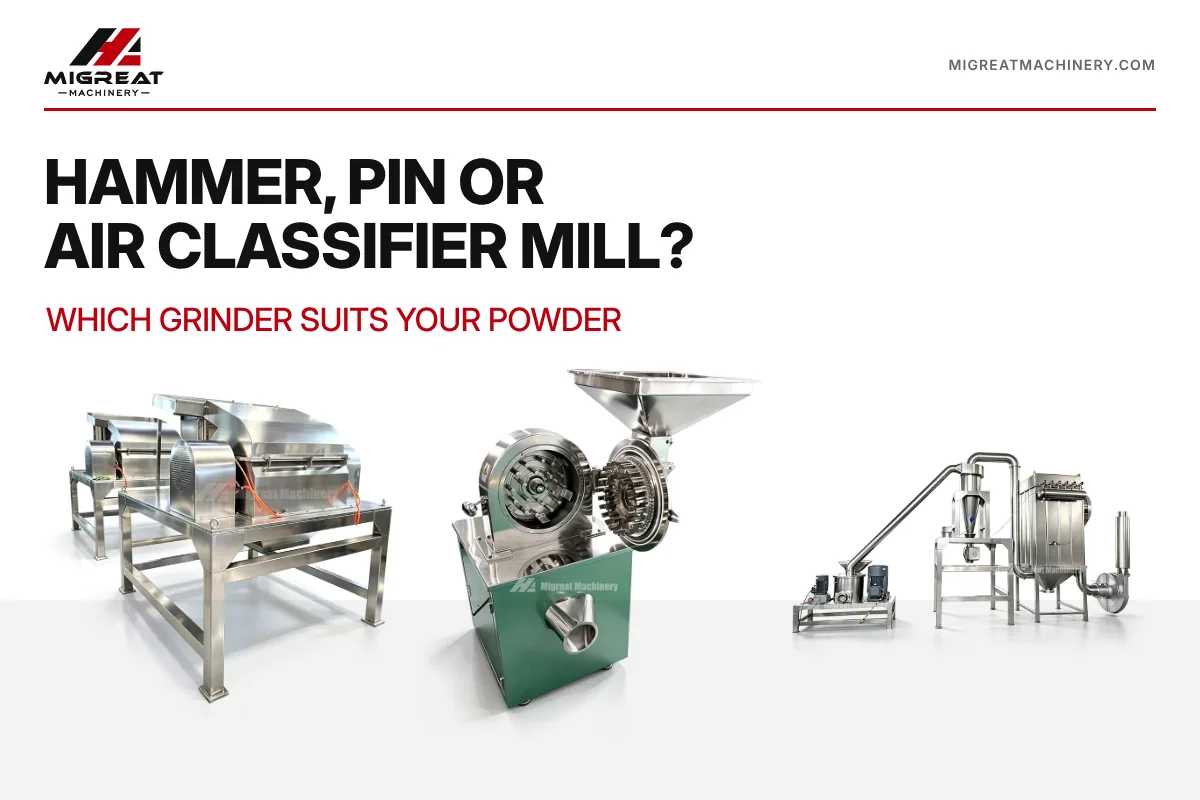
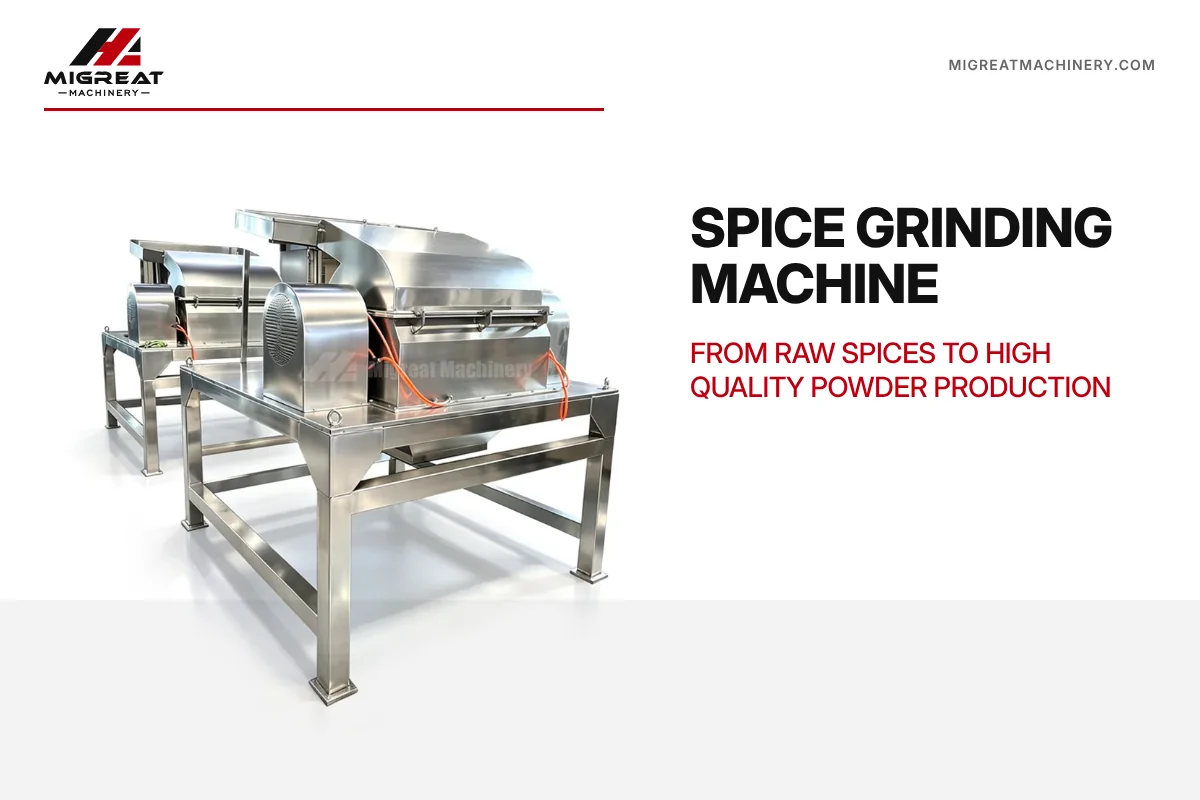
If a standard spice line only needs coarse to medium powder, a hammer mill is usually enough. Moving to an air classifier mill makes sense when the product needs ultra-fine powder. See how to choose between hammer, pin and air classifier mills.
Applications
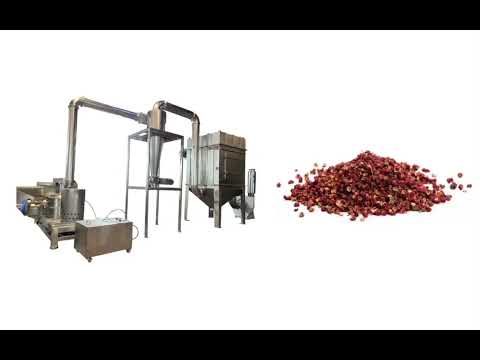
Migreat air classifier mills are used across several powder materials, shown in the videos below.


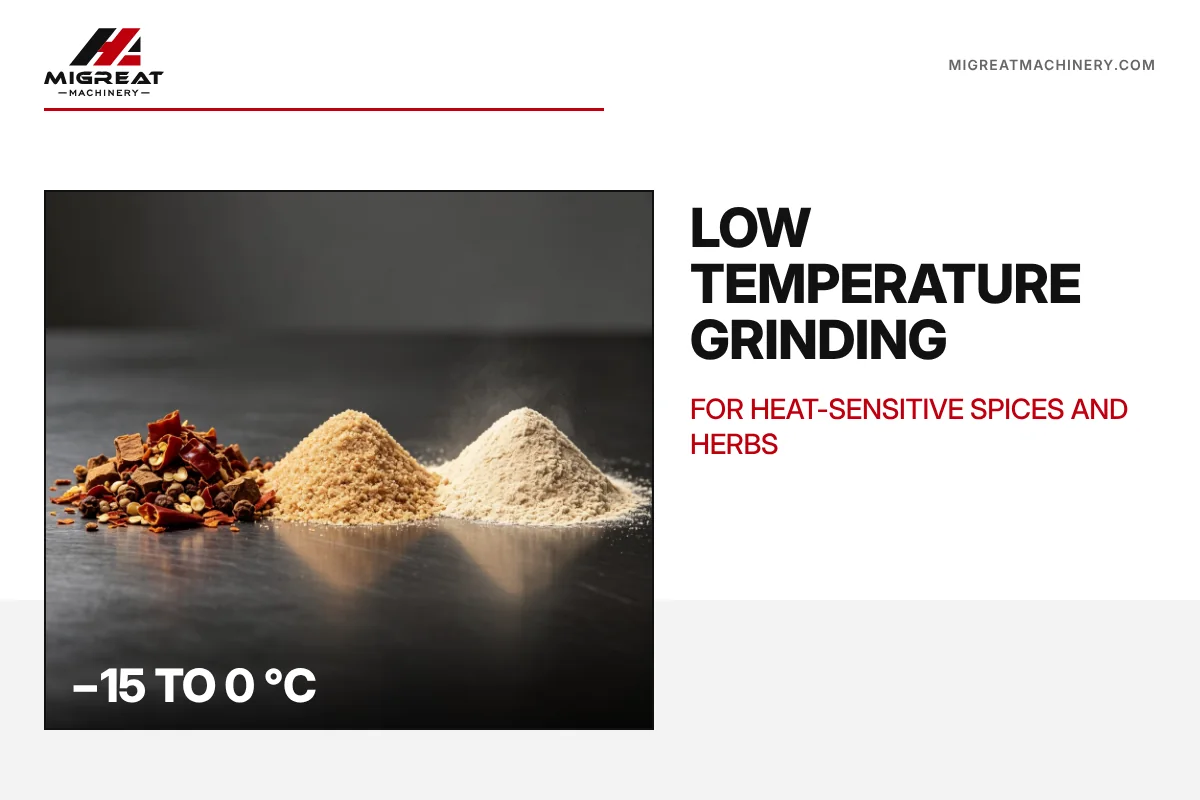
For heat-sensitive or oil-rich materials, combine fine grinding with cold air grinding.
Air classifier mill FAQ
QWhat is an air classifier mill?
A mill that grinds material at high speed and classifies the powder with air, so only fine particles leave the system.
QWhat fineness can it reach?
For spices, typically 100 to 300 mesh.
QHow is it different from a hammer mill?
A hammer mill sets fineness with screen size, commonly 20 to 100 mesh. An air classifier mill sets it by air classification and reaches finer powder.
QIs it suitable for heat-sensitive spices?
Grinding generates heat, so heat-sensitive spices are best paired with a cold air grinding system.