A screw conveyor moves powder through an enclosed tube and is a common feeder for grinders and mixers.
A vacuum conveyor draws powder through a closed line and suits clean, dust-free transfer. A belt conveyor carries bulk material, often on an incline. The choice depends on dust, layout, hygiene and what is at each end.
- Screw conveyor: enclosed tube feeding grinders and mixers
- Vacuum conveyor: closed transfer for clean handling
- Belt conveyor: carries bulk material, often inclined
- Choose by dust, layout, cleaning and what it feeds
Where conveyors fit
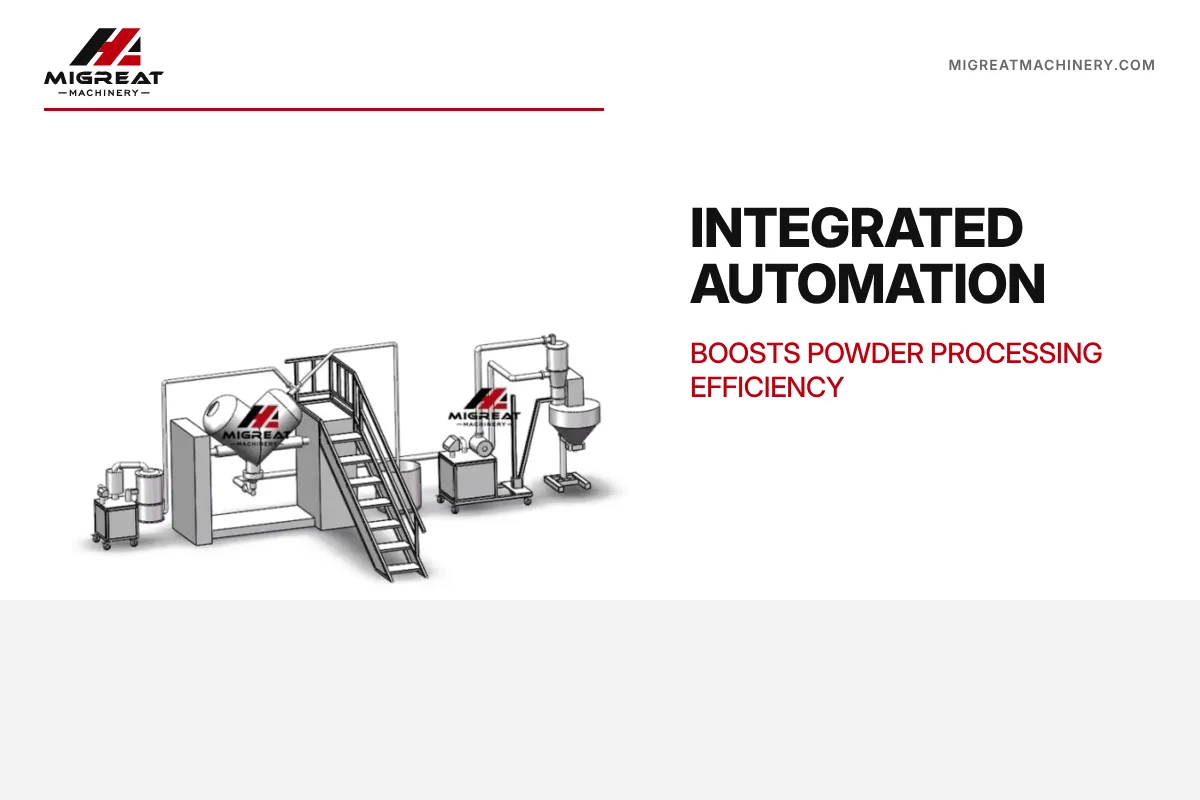
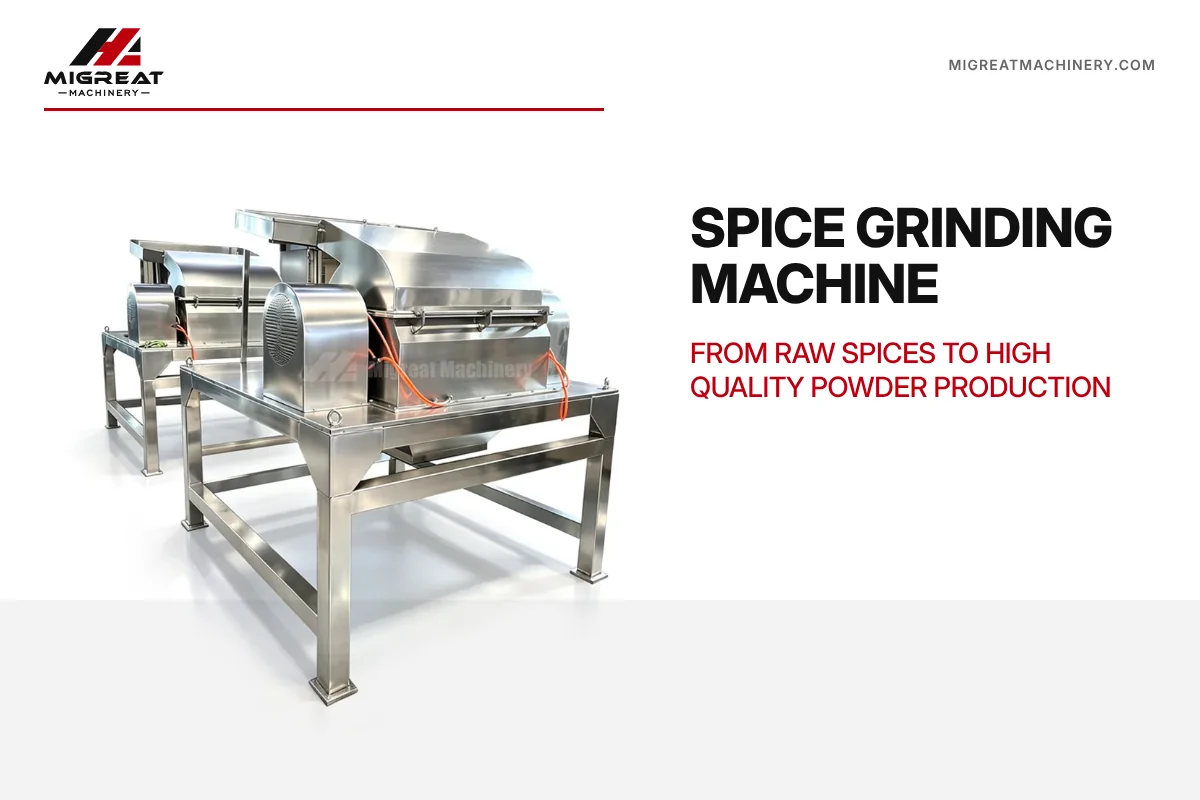
In a complete production process, material rarely moves by hand. A screw conveyor transfers coarsely crushed material to the grinding machine, and later stages are linked the same way. The conveyor you pick shapes dust, cleaning and the layout of the whole line.
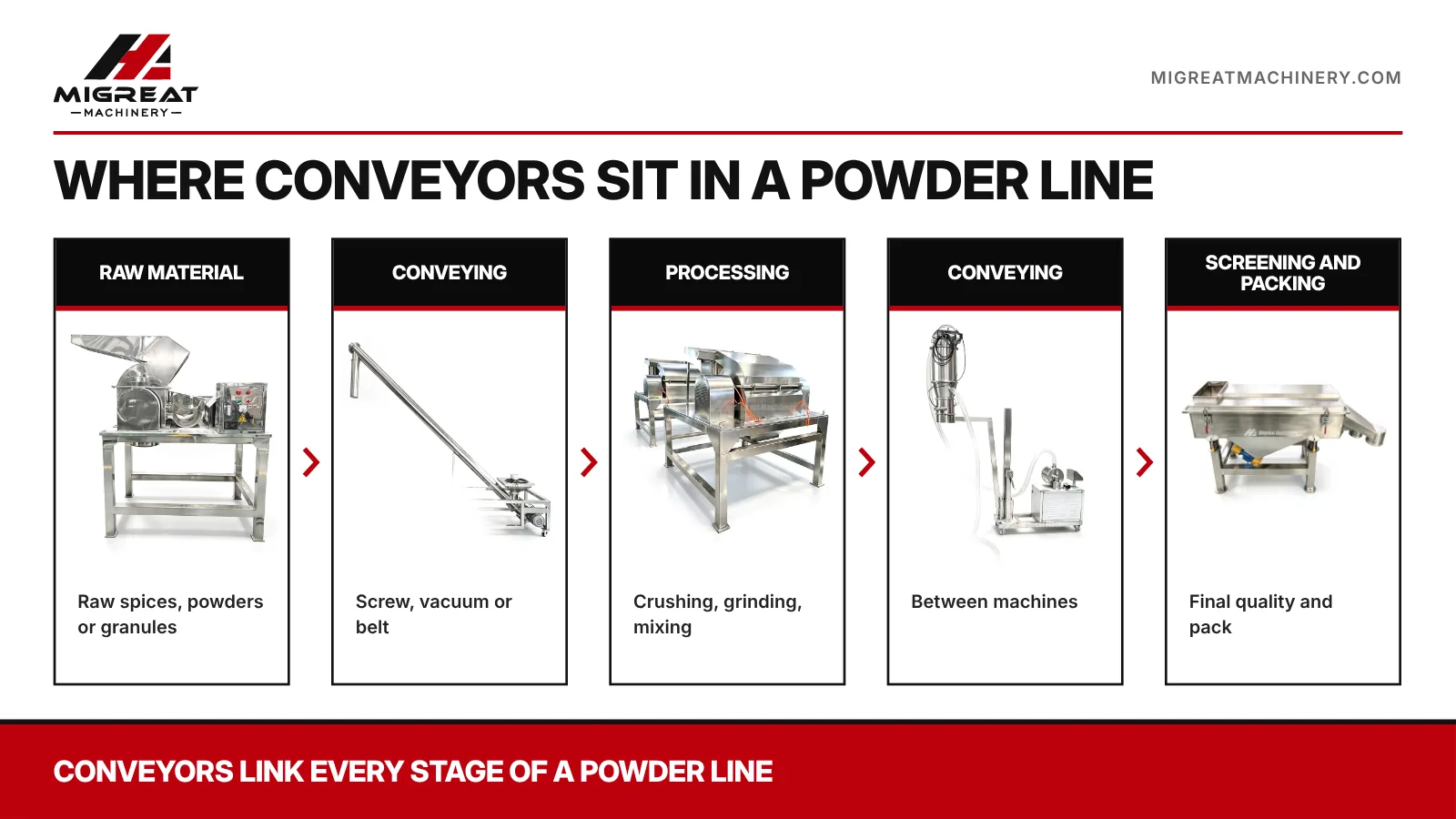
Screw, vacuum or belt
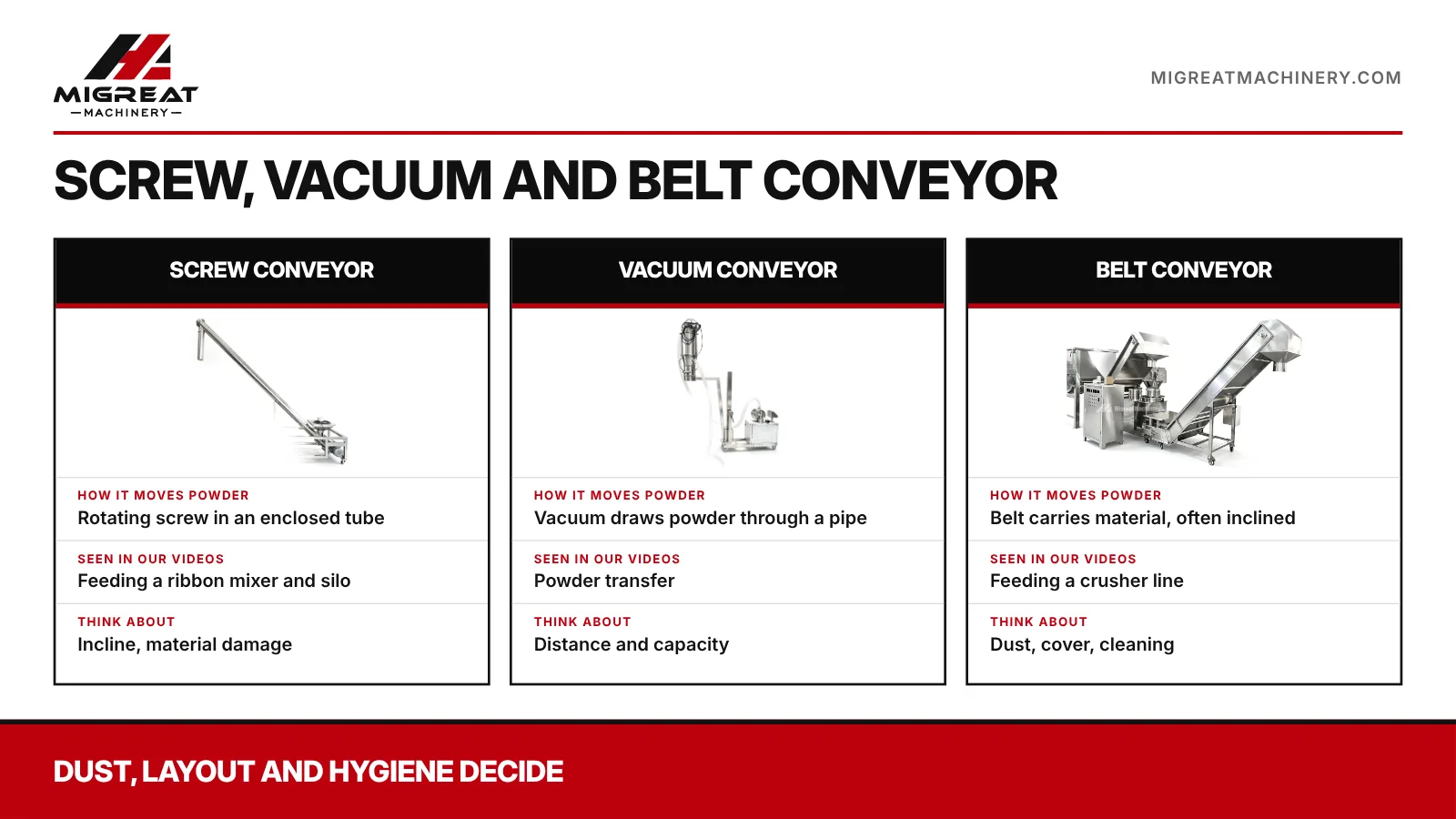


How to choose
Look at both ends
What feeds the conveyor and what receives the powder decides the type and the connection.
Rank dust and hygiene
Food and pharmaceutical lines favour closed transfer.
Check layout
Incline, distance and available space narrow the choice.
Plan cleaning
Think about how often the product changes and how you clean between runs.
Conveying is one stage of an integrated powder line. Mixers sit at the end of many conveyors: see how to choose a mixer.
QWhich conveyor feeds a grinder?
A screw conveyor is commonly used to move coarsely crushed material into the grinding machine.
QWhich conveyor keeps dust in?
Screw and vacuum conveyors are closed; belt conveyors depend on the cover.
QCan I combine conveyor types?
Yes. Many lines mix them, depending on each stage.